
The Lord of the Rings
Basic Facts
'The Lord of the Rings' is an epic high fantasy novel by J.R.R. Tolkien, published in three volumes from 1954 to 1955: 'The Fellowship of the Ring' (29 July 1954), 'The Two Towers' (11 November 1954), and 'The Return of the King' (20 October 1955). It was published by Allen & Unwin and is set in the fictional world of Middle-earth. The book is a sequel to 'The Hobbit' (1937) and has become a cornerstone of fantasy literature.
Plot Summary
The story centers on the One Ring, a powerful artifact forged by the Dark Lord Sauron to control all of Middle-earth. After being lost for millennia, the ring is found by the hobbit Bilbo Baggins. On his 111th birthday, Bilbo leaves the Shire, bequeathing the ring to his nephew Frodo. The wizard Gandalf warns Frodo that the ring must be destroyed to prevent Sauron from conquering all. Frodo, accompanied by his gardener Samwise Gamgee and later joined by Merry and Pippin, sets out from the Shire pursued by the Black Riders. In Bree, they meet the ranger Aragorn, and together they reach Rivendell. There, the Fellowship of the Ring is formed: nine companions including Gandalf, Aragorn, the elf Legolas, the dwarf Gimli, and the man Boromir, along with the four hobbits. They attempt to cross the Misty Mountains, but are forced to go through the Mines of Moria, where Gandalf falls battling a Balrog. They find refuge in the elven realm of Lothlórien. The Fellowship breaks apart after Boromir succumbs to the ring's temptation and tries to take it from Frodo. Frodo and Sam decide to go alone to Mordor, guided by the treacherous Gollum. Meanwhile, Merry and Pippin are captured by orcs, and Aragorn, Legolas, and Gimli pursue them, leading to the Battle of Helm's Deep. Gandalf returns as the White Wizard and rallies the forces of Rohan and Gondor. Frodo and Sam, with Gollum's help, infiltrate Mordor and reach Mount Doom. At the last moment, Frodo is unable to destroy the ring, but Gollum bites off his finger and falls into the lava, destroying the ring. Sauron is defeated. Aragorn is crowned king of Gondor and marries Arwen. Frodo, wounded in body and spirit, sails to the Undying Lands.
Themes
The novel explores themes of power and corruption, friendship and sacrifice, courage and responsibility. The One Ring symbolizes the temptation of absolute power and its destructive effect. The ordinary hobbits represent the idea that small, humble beings can make a crucial difference. Tolkien also weaves in elements of environmentalism, the loss of the natural world, and the consequences of industrial warfare, influenced by his own experiences in World War I. The story also deals with mortality, death, and the immortality of elves.
Writing Background
Tolkien began writing 'The Lord of the Rings' at the request of his publisher, who wanted a sequel to the successful 'The Hobbit'. However, the project grew into a massive work that incorporated the complex mythology and languages Tolkien had been developing since his youth. His academic background in philology and his love for Norse and Anglo-Saxon mythology heavily influenced the world. He worked on the book from 1937 to 1949, constantly revising. The influence of his wartime service in the Battle of the Somme is evident in the dark themes of war and loss.
Influence and Legacy
Initially met with mixed reviews, 'The Lord of the Rings' became a cultural phenomenon in the 1960s, especially after the publication of a paperback edition in the United States. It was embraced by the counterculture movement. The novel is considered the foundation of modern fantasy literature, inspiring countless authors and reshaping the genre. It has sold over 100 million copies worldwide and has been translated into dozens of languages. The film adaptations by Peter Jackson brought the story to a new generation and won numerous Academy Awards. Tolkien is widely regarded as the father of modern fantasy.
About the Author
Early Life and Family
John Ronald Reuel Tolkien was born on 3 January 1892 in Bloemfontein, Orange Free State (now South Africa), to Arthur Tolkien, a bank manager, and Mabel. After his father's death in 1895, his mother moved the family to England, settling in Birmingham. Mabel converted to Catholicism and tutored Tolkien, fostering his love for languages and botany. She died in 1904, leaving Tolkien and his brother Hilary orphans under the guardianship of Father Francis Morgan. Tolkien excelled at King Edward's School, learning Latin, Greek, and other languages, and began inventing his own languages. He met Edith Bratt, whom he married in 1916 after a fraught relationship due to his guardian's opposition. They had four children: John, Michael, Christopher, and Priscilla.
Academic Career and War Service
Tolkien entered Exeter College, Oxford, in 1911, studying Classics and later English Language and Literature. He graduated in 1915 and immediately enlisted in the British Army, serving in the Lancashire Fusiliers. He fought in the Battle of the Somme, an experience that deeply affected his worldview. After the war, he worked on the Oxford English Dictionary and then taught at Leeds University. In 1925, he became the Rawlinson and Bosworth Professor of Anglo-Saxon at Pembroke College, Oxford, and in 1945 he moved to Merton College as Merton Professor of English Language and Literature, retiring in 1959. He was a close friend of C.S. Lewis and a member of the Inklings literary group, where they read and discussed their works.
Major Works
Tolkien's first major publication was 'The Hobbit' (1937), a children's fantasy that became a success. Pressured for a sequel, he wrote 'The Lord of the Rings' (1954-1955), which took over a decade to complete. His legendarium, including 'The Silmarillion' (published posthumously in 1977), was a lifelong project. He also wrote scholarly works such as 'Beowulf: The Monsters and the Critics' and translations of medieval poems like 'Sir Gawain and the Green Knight'.
Death and Legacy
Tolkien's wife Edith died in 1971. He died on 2 September 1973 in Bournemouth, aged 81, and is buried in Oxford. His son Christopher edited and published many of his unfinished works, including 'The Silmarillion' and 'The History of Middle-earth' series. Tolkien is widely regarded as the father of modern fantasy literature, having created a richly detailed world that has influenced countless authors, from Terry Brooks to George R.R. Martin. His works have been adapted into award-winning films, and his languages and mythology continue to be studied. He remains one of the most beloved authors of the 20th century.
StoryFlow
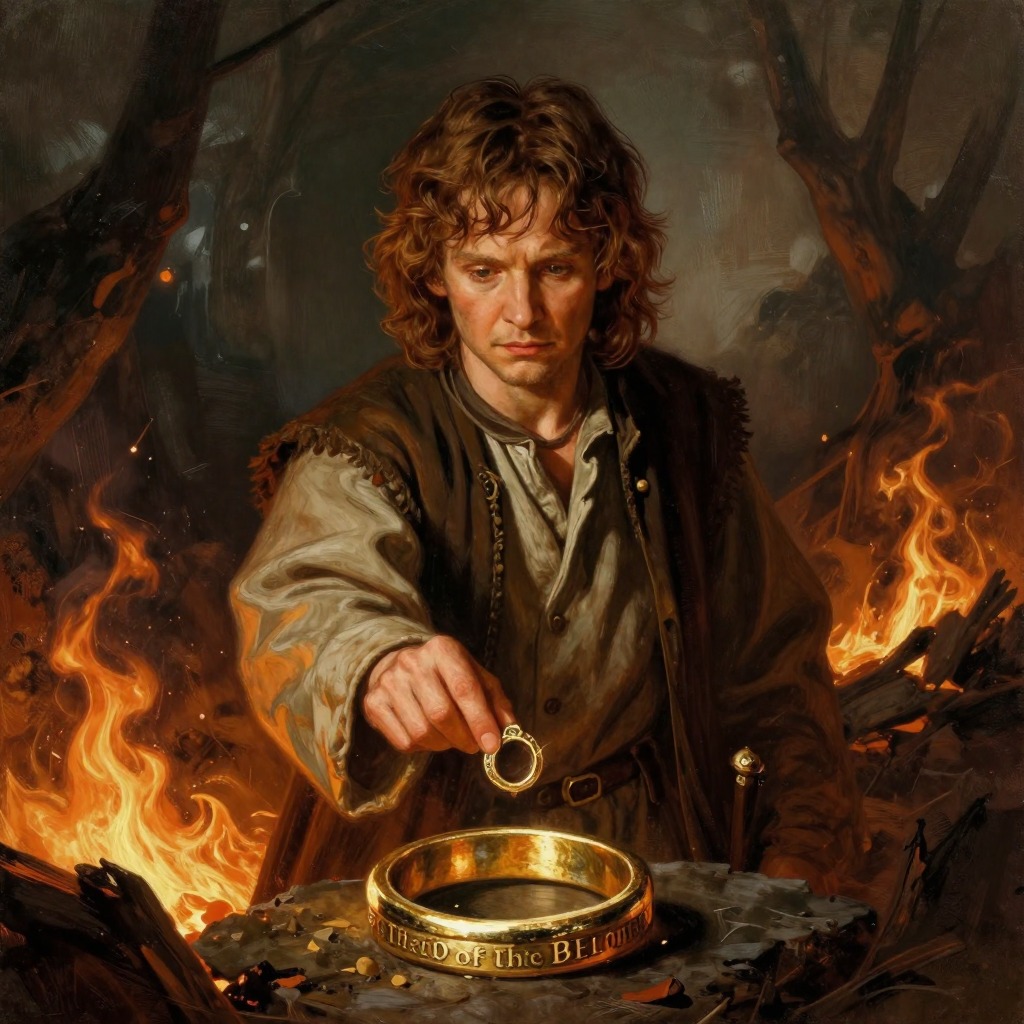
Frodo's Quest to Destroy the Ring
Frodo Baggins undertakes the perilous journey to destroy the One Ring in the fires of Mount Doom.
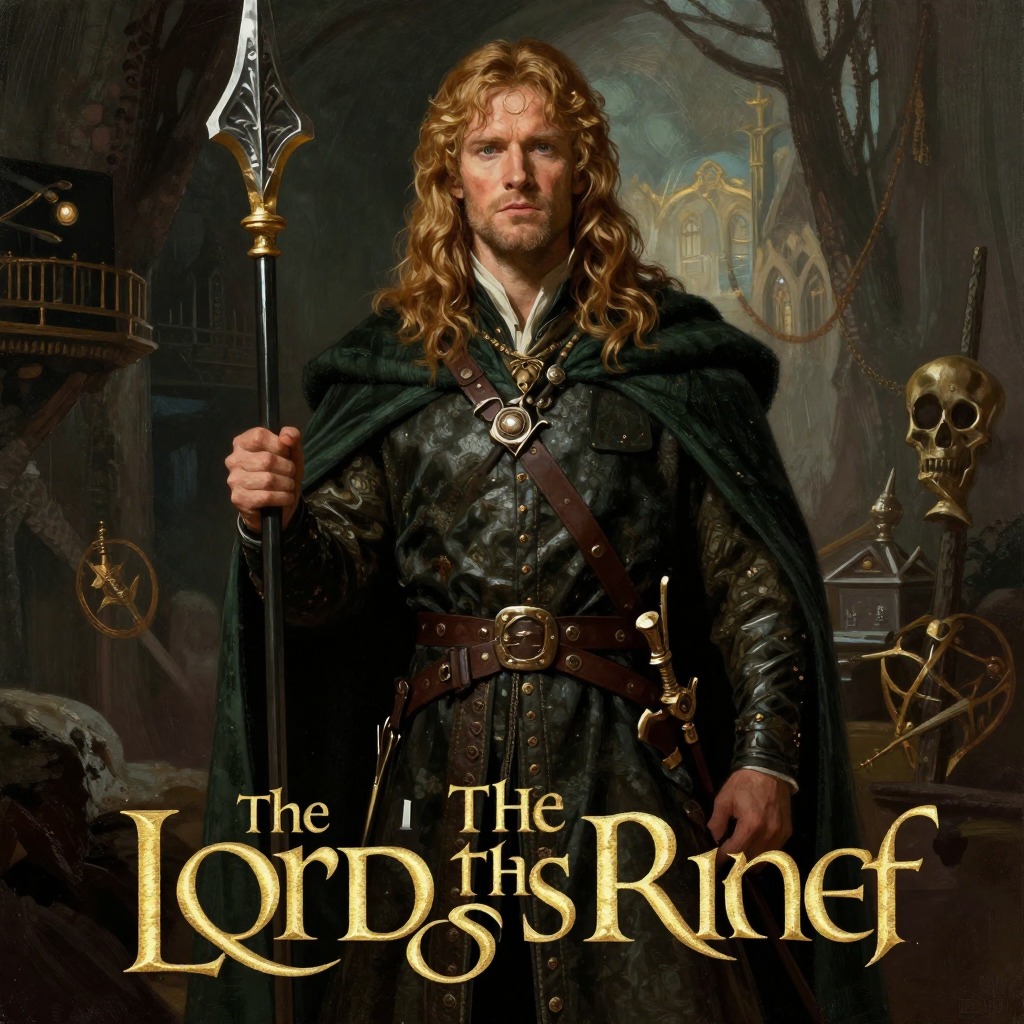
Aragorn's Path to Kingship
Aragorn son of Arathorn rises from Ranger to King of Gondor and Arnor, fulfilling his destiny.
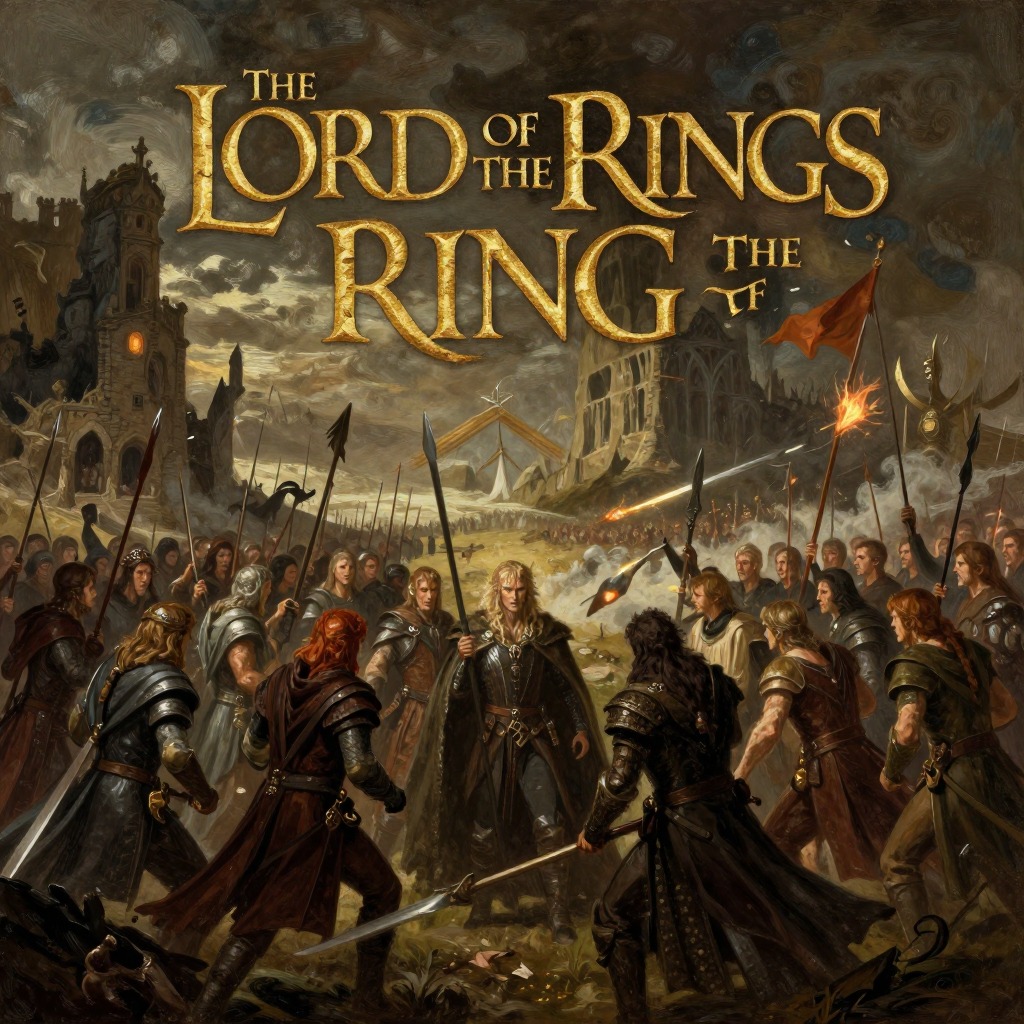
The War of the Ring
The great conflict between the forces of Sauron and the Free Peoples of Middle-earth.
